
Industrial Connections News. Cables, connectors, assemblies. Powering a more connected industry.

News For
A more connected
industry.

Massimo Battaini

Executive ProfilesPrysmian

Massimo Battaini: Managing Prysmian Across Power and Data

Prysmian’s chief executive faces an investment agenda that joins grid capacity, large transmission projects and digital infrastructure.

At a glance

Current role
Chief Executive Officer and General Manager, Prysmian [1] [3]
Appointed CEO
April 2024 [2]
Joined Pirelli
1987 [1]

Leading across two infrastructure markets

Massimo Battaini leads Prysmian as chief executive officer and general manager. The company’s July 2026 results presentation identified him as CEO as it reported growth in both power infrastructure and Digital Solutions. His present responsibility spans a business participating in the electrical and communications requirements of expanding infrastructure. [3]

A manufacturing career across markets

Battaini joined Pirelli in 1987 and worked in research and development and operations. His later assignments included business development across tires, power cables and telecom cables, followed by operations responsibility for the cable businesses. When Prysmian was created in 2005, he became CEO of its UK business. [1]

He subsequently served as chief operating officer, led the Energy Projects business and chaired Prysmian PowerLink. From June 2018 to February 2021, he headed North America. He returned to the group’s chief operating officer role before becoming CEO in April 2024, having served on its board since 2014. [1]

Organizing around different customer needs

His appointment coincided with a new organization comprising Transmission, Power Grid, Electrification and Digital Solutions. Announced with his arrival as CEO in April 2024, the structure was intended to align the company with energy transition and digital infrastructure demand. It separated the business into four named areas while retaining a common corporate strategy. [2]

The operating distinction matters. A submarine interconnector involves manufacturing and marine installation, while a distribution project combines cable, components and engineering. These differences suggest that managing the businesses within one company puts considerable weight on operational coordination: factory capability, specialist personnel and project commitments have to match the work being sold. [5] [4]

Converting demand into manufacturing capacity

A concrete example is the approximately $245 million investment in North American medium voltage cable production approved with Prysmian’s March 2025 strategy. At announcement, the project was scheduled for completion in the third quarter of 2027. The decision connected a growth objective with additional manufacturing capability intended to serve grid upgrades and electricity demand. [6]

The company’s July 30, 2026 results offered a more recent view of its markets. Second-quarter revenue reached €6.021 billion, with reported organic growth of 9.4%. Digital Solutions, Power Grid and Transmission each recorded double-digit organic growth, while Specialties declined 2.4%. Those figures show that the businesses under Battaini’s responsibility were moving at different rates, even within a growing group. [3]

For the cable industry, that is a useful way to read his leadership brief. The question is how investment, production and technical resources follow changing demand across the portfolio. Battaini’s operating background provides context for that assignment; the delivery of announced capacity and project commitments will provide the more concrete evidence of execution. [6] [5]

Source notes

Compiled from the public sources linked below. This profile is based on published information. Reported facts are accompanied by editorial analysis.

  1. Prysmian organizational chart and Massimo Battaini biography. Undated source. Accessed September 16, 2026.
  2. Massimo Battaini is Prysmian’s new CEO and General Manager. Published April 19, 2024. Accessed September 16, 2026.
  3. Prysmian raises guidance after its best quarter yet. Published July 30, 2026. Accessed September 16, 2026.
  4. Prysmian Power Grid. Undated source. Accessed September 16, 2026.
  5. Prysmian Transmission. Undated source. Accessed September 16, 2026.
  6. 2028 targets: Prysmian to accelerate growth. Published March 25, 2025. Accessed September 16, 2026.
TopicsMassimo BattainiPrysmianExecutive LeadershipCable ManufacturingPower InfrastructureDigital Infrastructure

Prysmian

Company ProfilesPrysmian

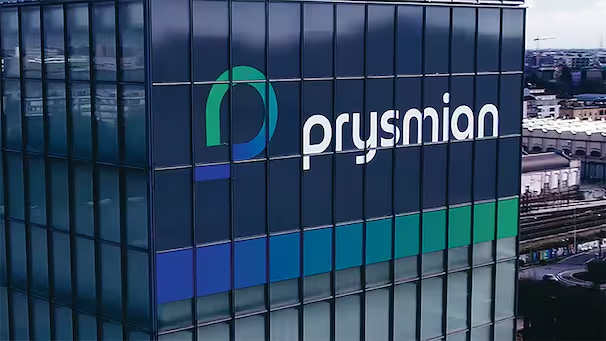
Prysmian: Where Power Cable Meets the Data Network

A portfolio spanning transmission, distribution and optical connectivity places Prysmian at several stages of an infrastructure project.

At a glance

Operating segments
Transmission, Power Grid, Electrification and Digital Solutions [10]
Operating reach
More than 50 countries [1]
Prysmian formation
2005, from Pirelli’s power and telecom cable activities [2]

Power and data in the same portfolio

Prysmian’s position in the cable industry is best understood through its range of responsibilities. Its four operating segments cover Transmission, Power Grid, Electrification and Digital Solutions, placing the company in both electrical infrastructure and communications networks. Operating in more than 50 countries, it serves markets with different products, installation requirements and purchasing cycles. [1] [10]

The modern Prysmian business took shape in 2005 from Pirelli’s power and telecom cable activities. Its subsequent expansion includes Encore Wire, whose acquisition closed in July 2024 and enlarged the company’s North American presence. [2] [7]

Cable as an installed system

In Power Grid, the offering includes high, medium and low voltage underground cable systems, network components, engineering and asset monitoring. Customers include utilities, industrial companies and installers. That combination makes the business relevant to projects requiring the cable itself as well as engineering and support around its installation and operation. [3]

Transmission adds another level of project responsibility. Prysmian delivers underground and submarine power links for interconnectors and offshore wind farms and operates cable-laying vessels. Its published technology portfolio includes 525 kV high voltage direct current cable systems using P-Laser or cross-linked polyethylene insulation. These are engineered systems whose scope extends through manufacture and deployment. [4]

Fiber, connection hardware and construction

Digital Solutions brings together optical fiber, optical and copper cables, and connectivity products. Its applications reach telecommunications networks, enterprise networks and data centers. The company also identifies installation, testing and maintenance among the activities available around that physical communications infrastructure. [5]

The June 2025 purchase of Channell added thermoplastic enclosures and fiber management products. Prysmian positioned the combination around fiber-to-the-home deployments, pairing cable with infrastructure components that organize and protect connections. The transaction illustrates how its product range is expanding into the hardware surrounding a cable network. [8]

Construction remains a separate part of the picture. Alongside building, power and data cables, Prysmian offers tools for cable selection, product documentation and drum tracking. Its Alesea system uses connected devices on drums to provide information about location, use and remaining cable. [6]

A wider supplier role

Further expansion remains in progress. On September 15, 2026, Prysmian announced U.S. antitrust clearance for its proposed Atkore acquisition. The transaction still required shareholder approval, other regulatory approvals and customary closing conditions, so Atkore was not yet a completed addition in that announcement. [9]

For industrial buyers, the practical implication is a supplier assessment that extends beyond conductor size or fiber count. Prysmian’s breadth makes engineering support, connection hardware and installation scope relevant to the comparison. Each project still needs its own definition of which parts of that wider offering are required. [3] [5]

Source notes

Compiled from the public sources linked below. Reported facts are accompanied by editorial analysis.

  1. Prysmian: Our company. Undated source. Accessed September 16, 2026.
  2. Prysmian organizational chart and Massimo Battaini biography. Undated source. Accessed September 16, 2026.
  3. Prysmian Power Grid. Undated source. Accessed September 16, 2026.
  4. Prysmian Transmission. Undated source. Accessed September 16, 2026.
  5. Prysmian Digital Solutions. Undated source. Accessed September 16, 2026.
  6. Prysmian Industrial & Construction. Undated source. Accessed September 16, 2026.
  7. Prysmian completes the acquisition of Encore Wire. Published July 2, 2024. Accessed September 16, 2026.
  8. Prysmian closes the acquisition of Channell. Published June 10, 2025. Accessed September 16, 2026.
  9. The acquisition of Atkore receives U.S. antitrust clearance. Published September 15, 2026. Accessed September 16, 2026.
  10. Prysmian Q2 2026 quarterly update presentation. Published July 30, 2026. Accessed September 16, 2026.
TopicsPrysmianPower CableFiber OpticsGrid InfrastructureCable ManufacturingConnectivity

A Second Source Is Not Qualified Until the Assembly Is

Industry & BusinessTechnical feature

A Second Source Is Not Qualified Until the Assembly Is

A backup quotation creates an option on paper. A qualified production configuration creates an option the business can actually use.

A second supplier has returned a competitive quotation. The commercial team has another contact, another price, and another possible delivery route. Those are useful additions. They are not yet proof that the business can substitute the supplied assembly without changing the product.

That is the gap a second-source program needs to close. The objective is not merely to find someone willing to build something similar. It is to establish a controlled alternative the organization knows how to order, receive, install, and support.

Define what must remain equivalent

Start with the released assembly requirements. Identify the electrical connections, physical envelope, materials or approved alternatives, environmental requirements, required markings, and acceptance evidence. Give the candidate supplier the same controlling package used to evaluate the existing configuration.

Epec’s custom-assembly offering illustrates the range of cable and connector choices within an engineered assembly. [1] A similar product description can therefore leave important construction decisions unresolved.

The recommended comparison is a requirements matrix. Ask the supplier to state compliance, exceptions, proposed alternatives, and supporting evidence against each relevant requirement. An exception is not necessarily a rejection; an undisclosed exception is a problem for the review process.

Qualify the interfaces as assembled

Check the mating components and installed arrangement, not only the connector family names. Confirm the intended pinout, viewing convention, cable exit, envelope, and service requirements through the responsible engineering owner.

If the alternate uses a different component, require a documented compatibility decision. Do not assume that a part advertised as compatible authorizes every mixed-vendor mating combination, preserves every approval, or satisfies the particular installation.

The same principle applies to materials and cable construction. The qualification question is whether the alternate meets the released application requirements, not whether a short description contains the same nouns as the original quotation.

Review how the supplier will build it

Ask for the production process that will make the delivered assembly, including the applicable tooling and work instructions. TE Connectivity maintains technical resources specifically for application tooling, reinforcing that termination manufacturing has its own controlled requirements. [2]

Review the candidate’s approach to setup approval, inspection, testing, deviations, and traceability. Request sample records that show how a finished build connects to its configuration and acceptance evidence.

IPC/WHMA-A-620 provides a requirements-and-acceptance framework for cable and harness assemblies. [3] State the agreed contractual criteria clearly; a supplier’s general familiarity with the standard is not the same as agreement on the requirements for this order.

Make the pilot representative

A qualification sample should be identified precisely. Record which materials, tooling, production location, and processes produced it, and decide what evidence is needed to support the intended production release.

Do not let a specially managed sample silently stand in for a different future production process. If the supplier plans to change the configuration or manufacturing arrangement, identify what must be reviewed before routine deliveries begin.

Define the acceptance owner and the decision record. The result should say what is approved, with which limitations, rather than merely announcing that “the samples looked good.” Where application testing is required, the responsible technical team should define and approve it.

Commercial readiness needs its own proof

Technical approval and supply readiness are related but separate. Confirm orderable part numbers, production quantities, packaging, lead-time commitments, change-notification expectations, and how the supplier will handle forecast or schedule changes.

The business case should include qualification and maintenance of the alternate. A backup that has not been revisited after design revisions may not be ready when it is needed. Assign responsibility for keeping the approved alternatives synchronized with the released product.

A useful periodic exercise is to review a hypothetical switch of an actual order. Can purchasing identify the approved part? Can receiving recognize the expected evidence? Can production use the delivery without a fresh interpretation of the assembly?

Second sourcing is valuable when it creates a usable option, not just an additional quotation. Qualify the complete build, keep its approval current, and make sure the commercial process can actually activate the alternative. That is the difference between a backup supplier and a backup plan.

The practical takeaway

A backup becomes real when its approved build and commercial process are both ready.

Sources & technical references

  1. Epec Engineered Technologies — Custom cable assemblies.
  2. TE Connectivity — Application tooling documents.
  3. Wiring Harness Manufacturer’s Association — IPC/WHMA-A-620 for OEMs and EMS providers.

Technical descriptions are grounded in the cited sources; recommended review questions and workflow proposals are editorial analysis. Manufacturer examples illustrate a point, not an endorsement. Apply current product documentation and the requirements of the actual installation.

About this byline

Evan Calder is an editorial pen name used by Industrial Connections News for coverage of industrial networking, automation, connectivity, and supply-chain strategy. This article was prepared with AI assistance using the references above. It does not represent a firsthand field report or a project-specific engineering approval.

Second sourcingSupplier qualificationCable assembliesSupply chain